 SUNSET:

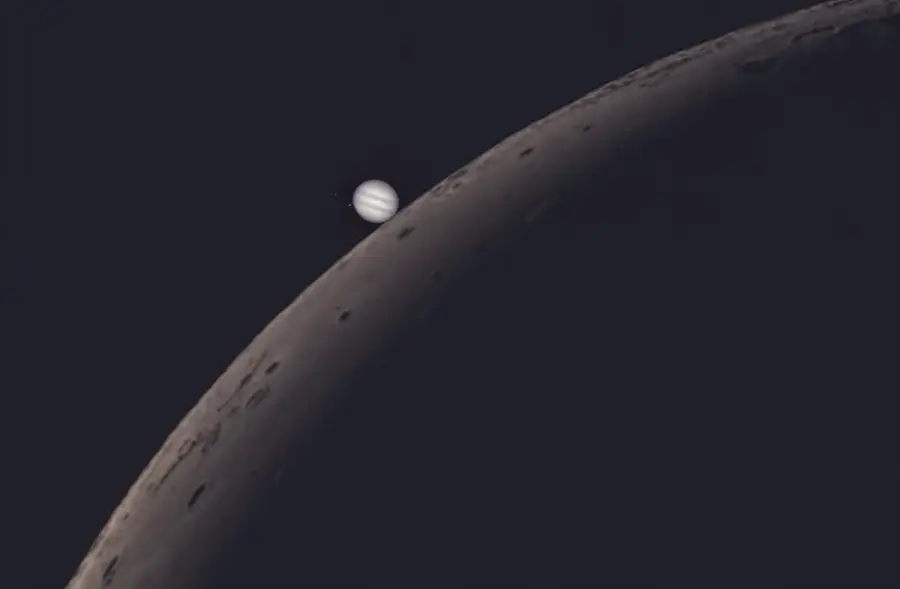
Rare Sight Ahead! Watch the Moon Occult Jupiter Early October 6th
Jupiter disappears then returns in a blaze of glory at the Moon's dark rim before dawn.
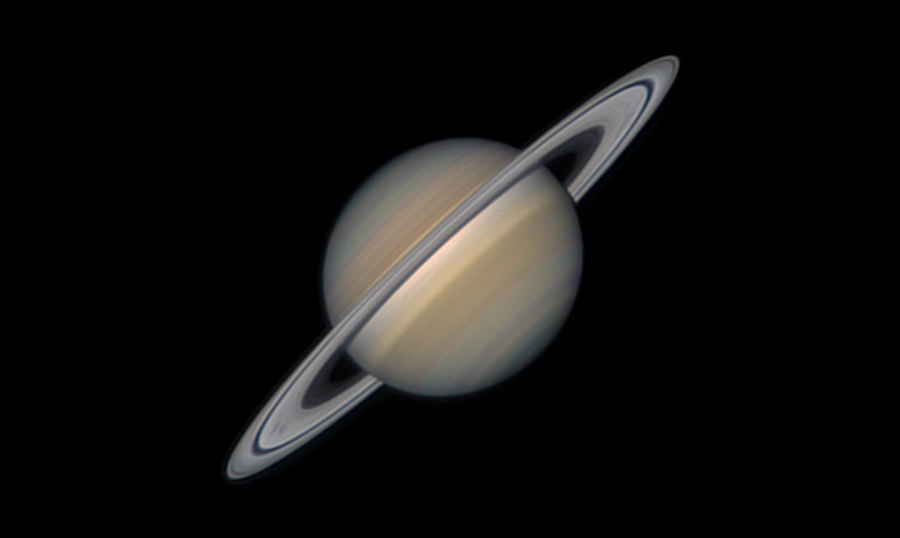
Saturn Flaunts its Rings at Opposition the Night of October 3–4
Leaves fall. Frost sparkles. And once again we fall under the magical spell of Saturn, the Lord of the Rings.
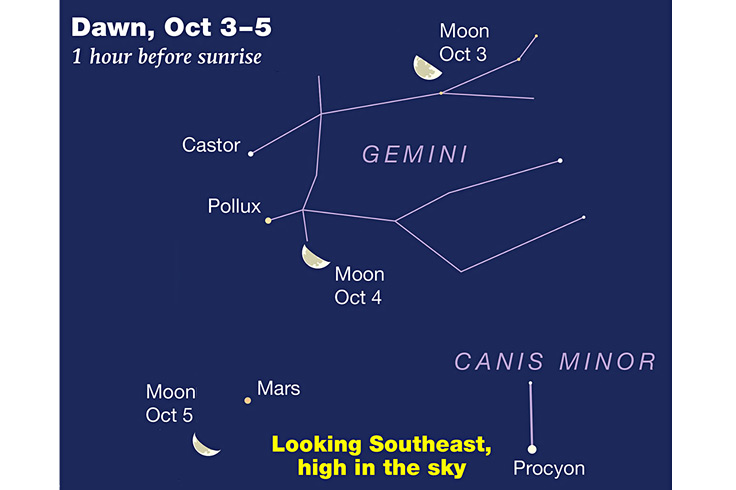
This Week's Sky at a Glance, October 2 – 11
The Moon occults Jupiter for much of North America very late Monday night October 5-6, after missing Castor, Pollux, and Mars on previous nights.
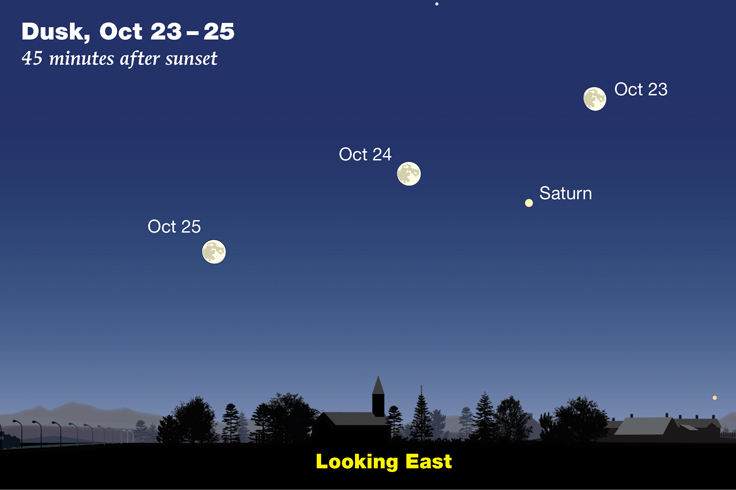
October Podcast: Saturn is a “Star”
This episode takes you on a tour of the stars and planets that you’ll see overhead during October. This month the spotlight is on Saturn, which can be seen all night, and a fantastic occultation of Jupiter by the Moon. So grab your curiosity, and come along on this month’s Sky Tour.
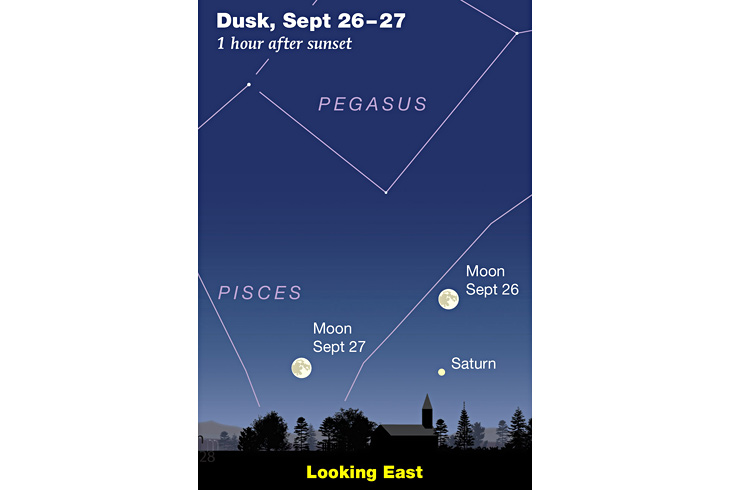
This Week's Sky at a Glance, September 25 – October 2
Saturn comes to opposition. So does the Moon. Once the Moon is gone from the evening sky, try with your telescope for the autumn globular clusters Sagittifolia, Queen Anne's Lace, Watercress by the Stream, and Seaflower of the Deep.
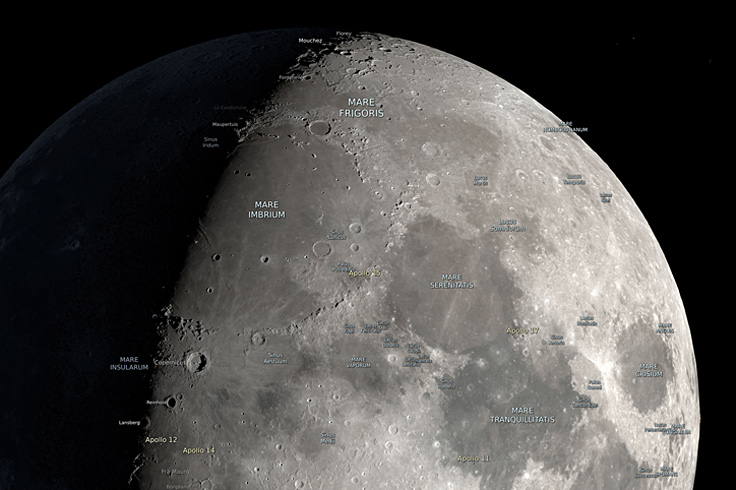
This Week's Sky at a Glance, September 18 – 27
Every evening the waxing gibbous Moon reveals a wealth of new telescopic detail. Can you still catch Venus low in twilight as it nears conjunction? On the opposite side of the sky, Saturn nears opposition.
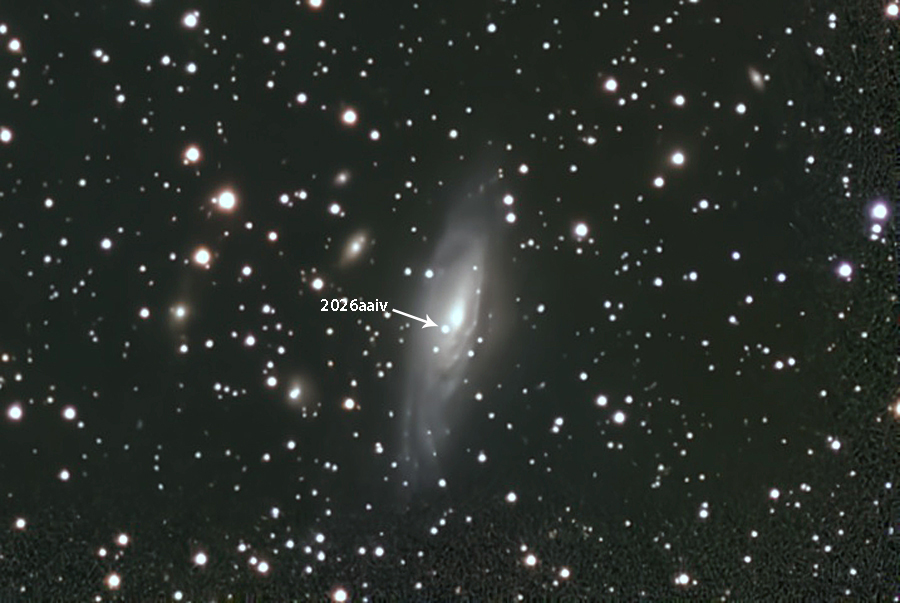
Second Bright Supernova in Spiral Galaxy NGC 7331 in a Year
A familiar galaxy in Pegasus hosts a supernova bright enough to see in a 4-inch telescope.
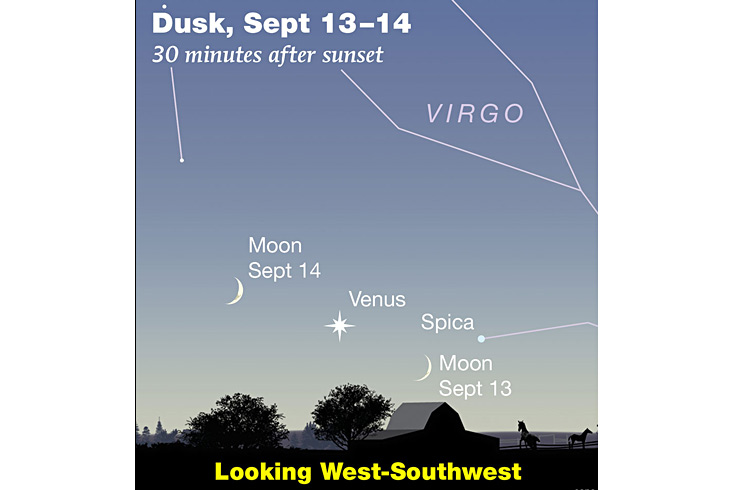
This Week's Sky at a Glance, September 11 – 20
Very low after sunset, the crescent Moon steps past Venus from Sunday to Monday. A couple days later, it steps past higher Antares.
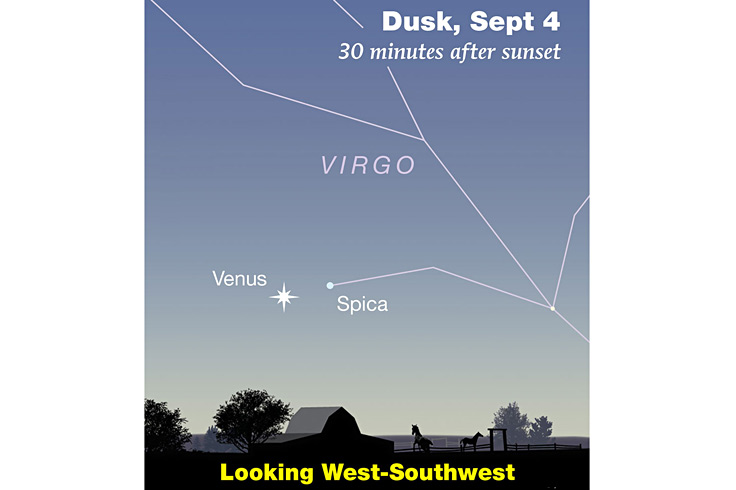
This Week's Sky at a Glance, September 4 – 13
Venus is sinking down and away. The Sagittarius Teapot pours out its tea as summer nears its end. Saturn rises around nightfall and climbs high as night grows late.
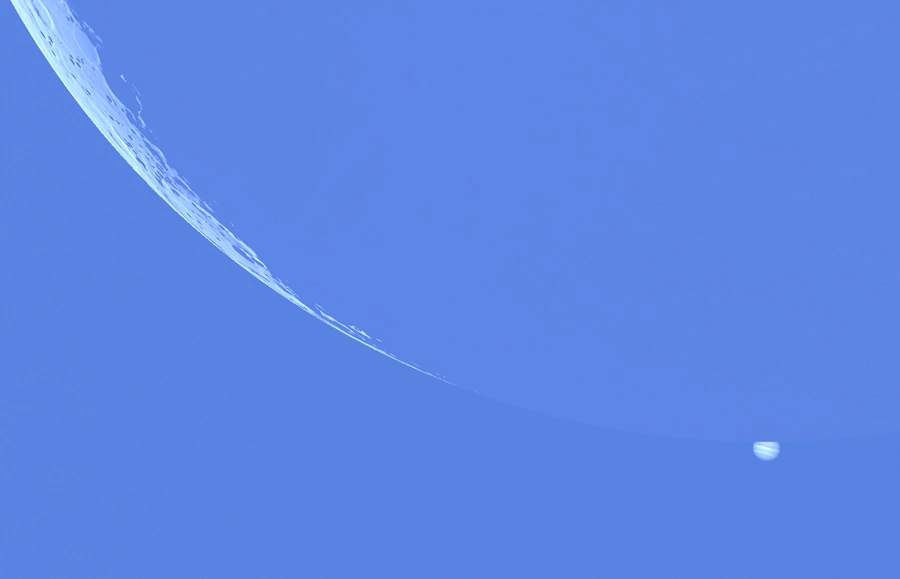
Tuesday's Daytime Jupiter Occultation a Warm-Up for the "Big One"
A daytime occultation to whet your appetite for next month's spectacular show.
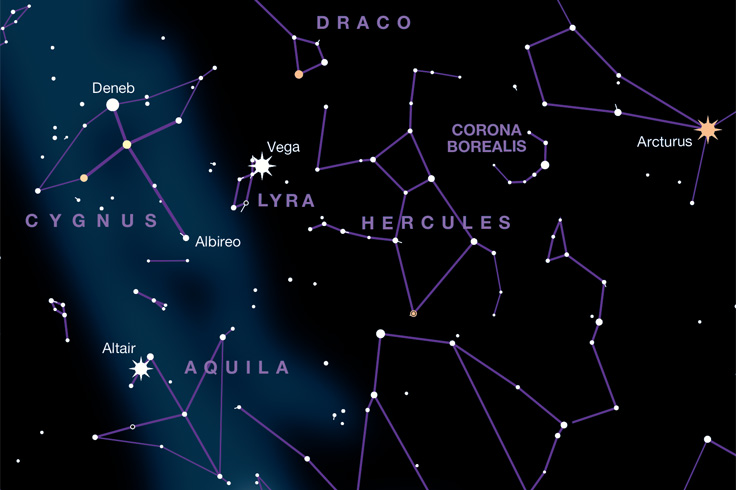
September Podcast: Vega & Its Vicinity
This episode takes you on a tour of the stars and planets that you’ll see overhead during September. First, we’ll check out this month’s equinox and Harvest Moon; then we’ll track down the bright planets, explore some lesser-known constellations, and bounce around the Summer Triangle. It’s a great introduction to the late-summer sky. So grab your curiosity, and come along on this month’s Sky Tour.
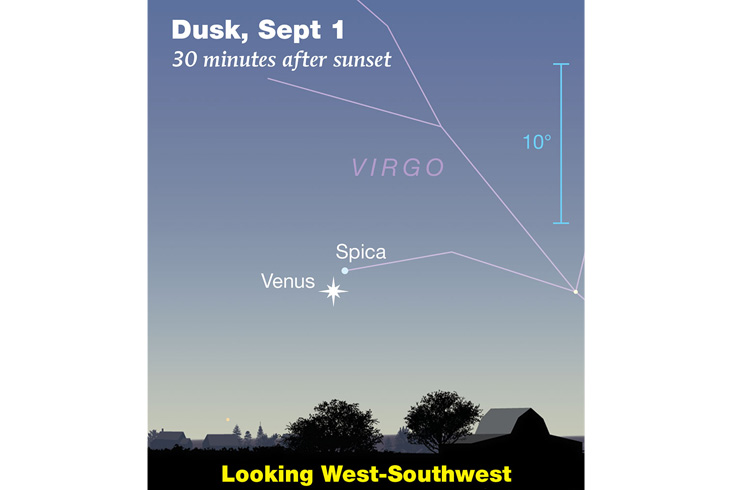
This Week's Sky at a Glance, August 28 – September 6
Venus and Spica finally have their conjunction just as they sink way down in twilight. After dark, Boötes and the Big Dipper have assumed their late-summer pose.
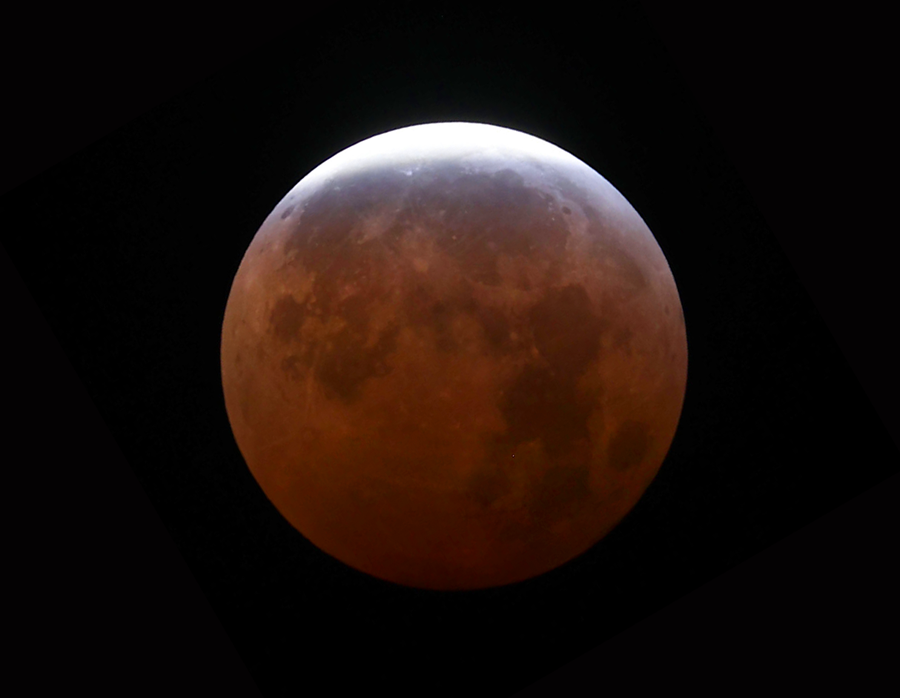
Next Up! A Deep Partial Lunar Eclipse on Aug. 27–28
A near-total lunar eclipse wraps up August's trifecta of two major eclipses and the Perseids.

Meet Altair, the Eagle’s Eye
Altair, centerpiece of Aqulia, the Eagle, is the twelfth-brightest star in the night sky and one of the closest stars to Earth.
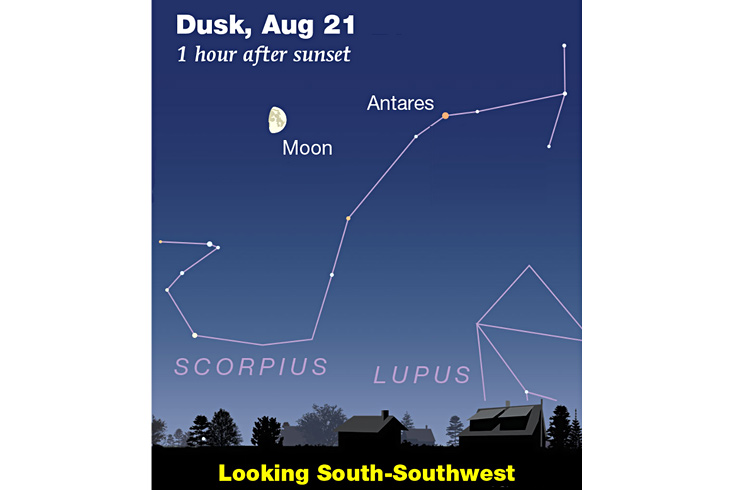
This Week's Sky at a Glance, August 21 – 30
The waxing Moon is on its way to a not-quite-total lunar eclipse Thursday the 27th. On Friday the 21st, it's still east of Antares in the evening sky.
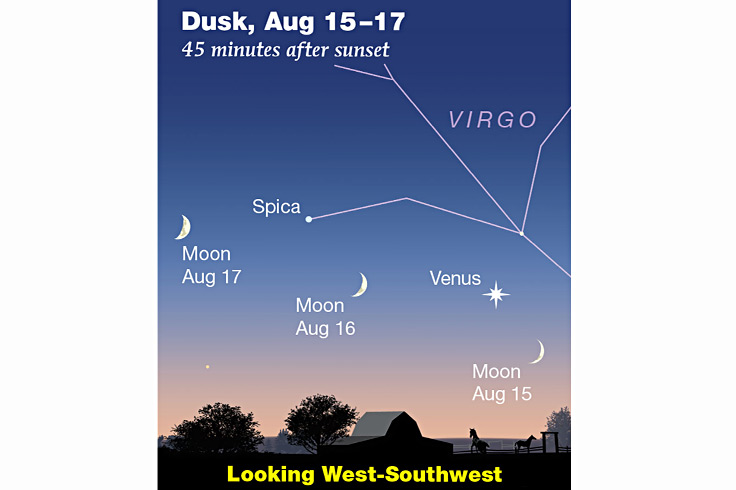
This Week's Sky at a Glance, August 14 – 23
After eclipsing the Sun last Wednesday, the Moon returns to the evening sky as a crescent low in twilight. Watch it pass Venus, then Spica.
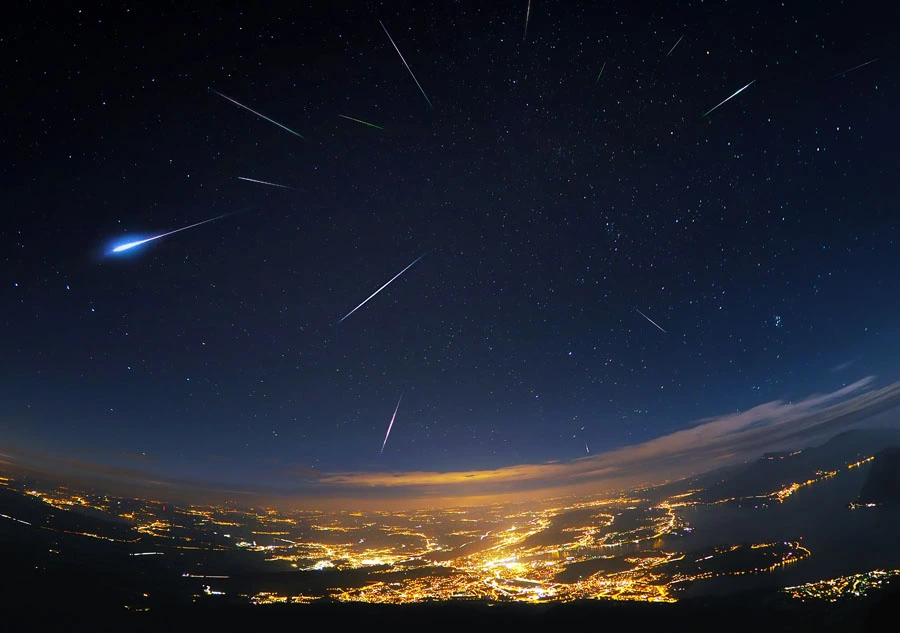
A Perfectly Timed Perseid Meteor Shower
With a new Moon in play, skywatchers anticipate a fine Perseid performance this year.
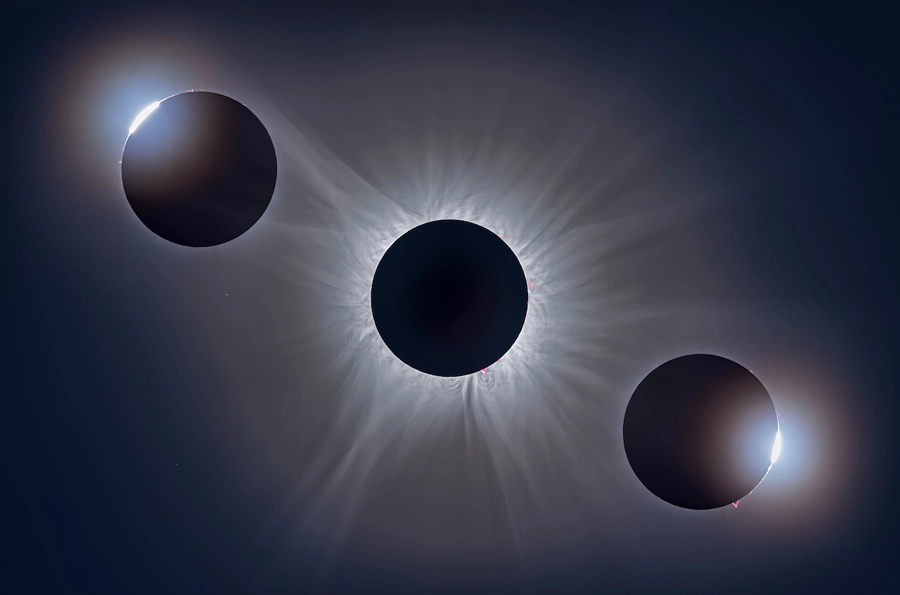
Rare Total Solar Eclipse-Perseid Meteor Shower Double-Header August 12th
The only total solar eclipse of the year coincides with the Perseid meteor shower. Here's what you need to know to watch the eclipse.
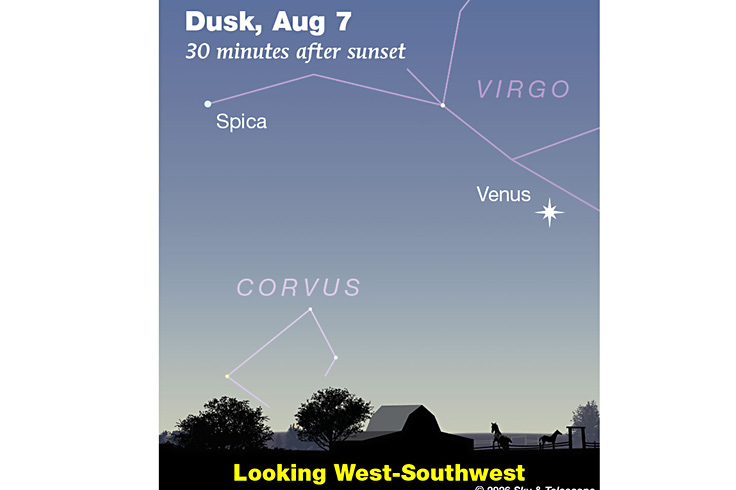
This Week's Sky at a Glance, August 7 – 16
In twilight, watch bold Venus and tiny Spica approach each other to meet September 1st. And check whether you'll be able to see anything of Wednesday's solar eclipse!
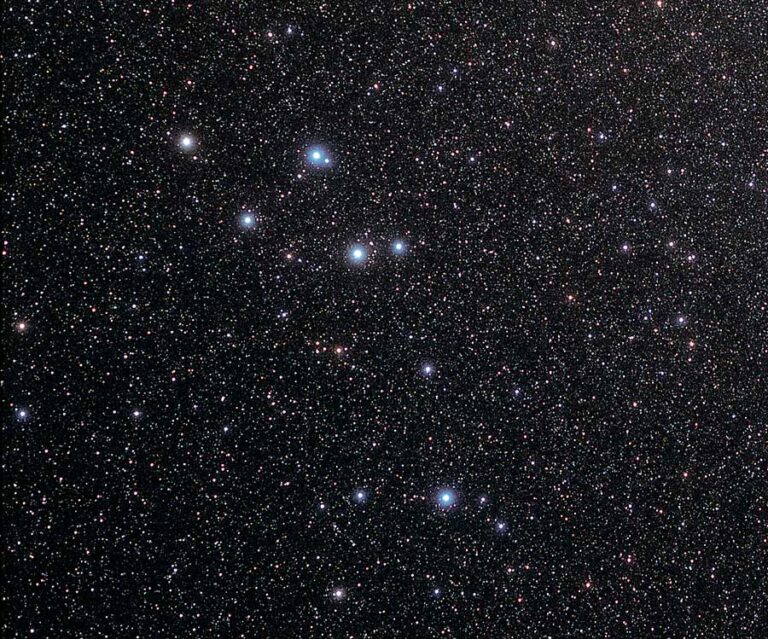
Meet the Constellations: Delphinus, the Dolphin
Delphinus, the constellation looks just like a tiny Dolphin that's splashing its way through the sky amidst other famous summer sights.